
A fresh coat of paint can completely change how your home looks and feels. But interior painting is more than rolling paint onto a wall. Proper preparation, repairs, color consistency, clean edges, and the right finish all affect the final result.
So, how do you know when a DIY paint job has become too much? If your walls are damaged, the project involves several rooms, or you simply do not have the time and equipment, hiring a professional interior painting contractor can save you from costly mistakes and unnecessary stress.
What Are the Signs You Need a Professional Interior Painting Contractor?
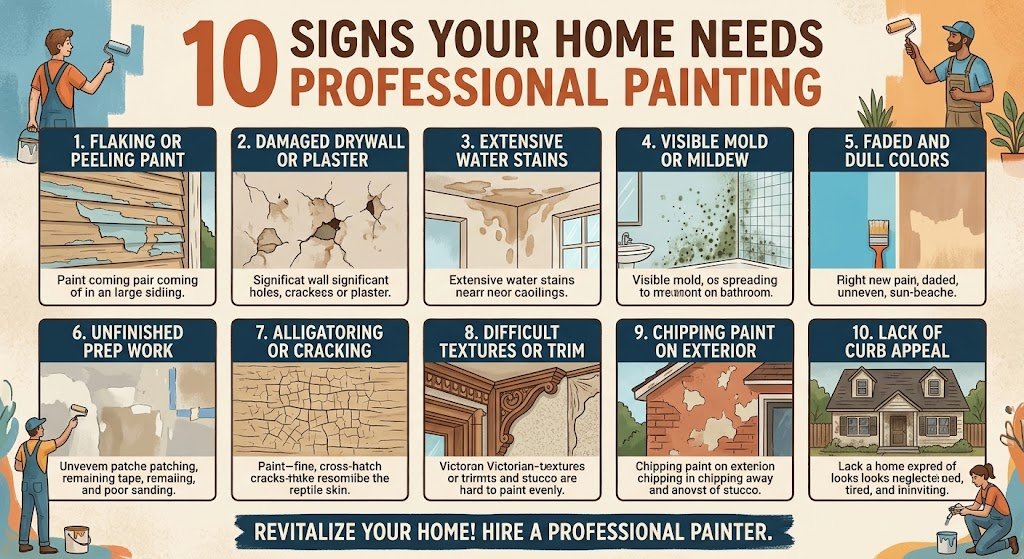
Here are 10 situations where professional help makes practical sense.
1. Your Walls Have Cracks, Holes, or Peeling Paint
Paint should not be used to hide serious surface problems. Cracks, nail holes, bubbling, peeling, and damaged drywall usually need cleaning, patching, sanding, or priming before new paint is applied.
2. You Are Painting Several Rooms
Painting one small bedroom can be manageable. Painting an entire home is very different. Multiple rooms require consistent color, careful preparation, furniture protection, and a reliable schedule.
3. You Are Changing From a Dark Color to a Light One
Going from navy, red, or another deep color to white or a light neutral often requires additional preparation and coats. A professional can choose the appropriate primer and application method for better coverage.
4. Your Ceilings, Stairways, or Trim Are Difficult to Reach
High ceilings, stairwells, detailed trim, and awkward corners can make interior painting slow and unsafe. Professionals have the equipment and experience to work in these areas more efficiently.
5. You Keep Seeing Stains After Painting
Water marks, smoke stains, grease, and other discoloration can bleed through ordinary paint. If the underlying cause is not addressed and the surface is not properly sealed, the stain may return.
6. You Need Extensive Preparation
Surface preparation is one of the most important parts of a lasting paint job. Wallpaper removal, sanding, caulking, drywall repairs, scraping, and priming can take longer than the actual painting.
7. You Have a Tight Deadline
Moving into a new home, preparing for guests, selling a property, or completing a renovation can create a firm deadline. A professional crew can organize preparation, painting, drying time, and cleanup around the project schedule.
8. You Want a Consistent, Professional Finish
Uneven coverage, visible roller marks, messy edges, and paint splatter can make an otherwise attractive room look unfinished. Experienced painters understand how to maintain consistent coverage and clean lines.
9. You Are Unsure Which Paint or Finish to Use
Matte, eggshell, satin, semi-gloss, and other finishes perform differently. A professional can help match the paint sheen, product, and color to the room’s lighting, traffic, moisture, and surfaces.
10. You Want the Job Done Without Managing Everything Yourself
DIY painting means buying supplies, moving furniture, protecting floors, preparing surfaces, painting, cleaning brushes, and fixing mistakes. Hiring a contractor lets you hand those responsibilities to an experienced team.
What Are the 7 Key Features of a Professional Painting Contractor?
Look for a contractor who provides:
- Detailed written estimates covering preparation, materials, labor, and cleanup.
- Proper insurance and required credentials for your location.
- Clear preparation procedures rather than simply promising “two coats.”
- Quality paint and primer recommendations suited to the surface.
- References and genuine customer reviews that can be independently checked.
- A written project timeline with expectations for access and completion.
- A workmanship warranty or written guarantee with clear terms.
Current contractor guidance also emphasizes comparing quotes by preparation, paint products, number of coats, insurance, references, and warranty rather than simply choosing the lowest price.
How to Choose the Right Interior Painting Contractor
Start by getting two or three detailed estimates. Ask what preparation is included, which products will be used, how many coats are planned, who will perform the work, and how your furniture and floors will be protected. Do not rely only on a company’s online rating. Check recent reviews, references, insurance information, and the written contract before work begins.
Professional Insight: What Actually Makes an Interior Paint Job Last?
The biggest difference is usually not the final coat of paint. It is what happens beforehand. A properly prepared wall gives the primer and paint a clean, stable surface to bond to, while rushed preparation can leave visible defects or premature paint failure.
A professional should be able to explain why a surface needs sanding, patching, caulking, or priming instead of simply adding another coat of paint.
Pros and Cons of Hiring a Professional Painter
Pros
- Better surface preparation and finish quality.
- Less time and physical effort.
- Professional tools and equipment.
- Help choosing paint colors and finishes.
- Safer handling of difficult areas.
- Less cleanup and project management.
Cons
- Higher upfront cost than DIY.
- You need to schedule around the contractor.
- The quality depends on the company and crew you choose.
How to Know If It Is Time to Call a Painter
If you have several of these signs at once, especially damaged walls, extensive preparation, multiple rooms, difficult access, or a tight deadline, it is worth getting a professional assessment before buying paint and supplies.
A good contractor should explain what your project actually needs, provide a detailed estimate, and make the process clear from preparation through final cleanup.
Top 4 FAQs
Is it worth hiring a professional interior painter?
For large, complicated, or preparation-heavy projects, professional painting can save substantial time and reduce the risk of expensive mistakes.
How do I know if my walls need primer?
Primer may be appropriate for repaired surfaces, major color changes, stains, or certain new and porous surfaces. The correct choice depends on the existing coating and condition.
How many rooms should I paint before hiring a professional?
There is no fixed number. However, painting several rooms or an entire floor can quickly become a large project requiring significant preparation and consistent application.
What should I ask an interior painting contractor?
Ask about insurance, preparation, paint brands, number of coats, estimated timeline, cleanup, warranty, and what is included in the written quote.