A successful construction project needs more than good materials and a detailed plan. Skilled contractors bring practical knowledge, trade coordination, quality control, and problem-solving experience that help turn plans into safe, functional structures. From residential construction to commercial building projects, experienced contractors help manage the many moving parts involved in construction. Their work can reduce costly mistakes, prevent unnecessary delays, and keep different trades working toward the same goal.
What Is the Role of Skilled Contractors in General Construction?
A skilled contractor is responsible for carrying out construction work according to the agreed plans, specifications, safety requirements, and quality standards. A general contractor may also coordinate subcontractors, materials, schedules, inspections, and other project requirements. The real value of an experienced contractor is not simply completing physical work. It is knowing what needs to happen, when it needs to happen, and how different parts of the project affect one another.
Key Features of Skilled Contractors
1. Construction Expertise
Experienced contractors understand construction methods, materials, tools, building requirements, and common site problems. This practical knowledge helps them make better decisions during construction.
2. Skilled Trade Coordination
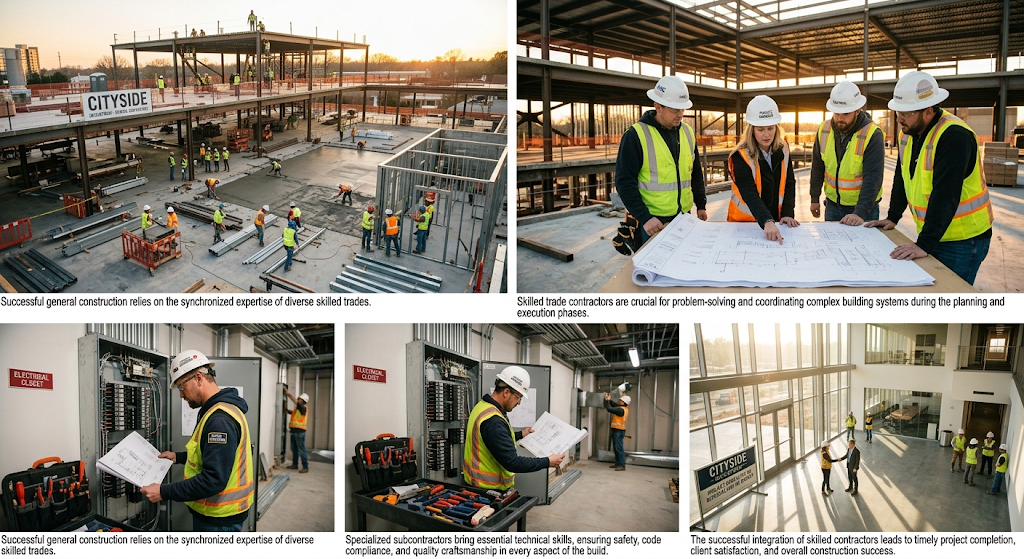
Large projects often involve electricians, plumbers, framers, HVAC specialists, painters, and other trades. A capable contractor coordinates these teams, so work is completed in the correct sequence.
3. Quality Control
Skilled contractors inspect workmanship throughout the project rather than waiting until the final stage. Early quality checks can help identify errors before they become expensive problems.
4. Schedule Management
Construction schedules can change because of weather, material availability, inspections, or unexpected site conditions. Experienced contractors adjust the workflow while keeping the project moving.
5. Budget Awareness
Good contractors understand that small mistakes can become expensive when they affect later stages. Careful material planning, accurate scopes, and change-order control can help reduce unnecessary costs.
6. Safety and Compliance
Professional contractors take site safety seriously and understand the importance of applicable building requirements, permits, inspections, and trade regulations.
7. Problem-Solving Skills
Unexpected issues are common in construction. Skilled contractors can assess the situation, communicate the options, and find practical solutions without unnecessarily disrupting the entire project.
How to Choose a Skilled Contractor?
Before hiring a contractor, review their relevant project experience, references, insurance, written scope of work, payment terms, and communication process. Ask for examples of completed projects similar to yours rather than relying only on general claims. It is also useful to clarify who will handle permits, inspections, subcontractors, materials, cleanup, and changes to the original scope. Putting these responsibilities in writing can prevent misunderstandings later.
How to Ensure a Construction Project Runs Successfully?
Start with a clearly defined scope and realistic schedule. Keep communication open between the property owner, general contractor, designers, and subcontractors. A successful project also depends on regular progress checks. Addressing a problem when it first appears is usually easier than correcting it after several additional construction stages have been completed.
Practical Insight From Construction Projects
One important lesson in construction is that small coordination errors can create larger problems later. For example, an issue with an early structural or layout stage can affect framing, electrical work, finishes, and other trades.
This is why experienced contractors do more than supervise workers. They continually check how one stage of construction will affect the next.
Pros and Cons of Hiring Skilled Contractors
Pros
- Better coordination between multiple trades
- Improved construction quality
- More effective schedule management
- Professional handling of unexpected problems
- Better control over construction risks
Cons
- Professional contractor fees increase the initial project cost
- Availability can be limited for highly experienced contractors
- Changes to the project may increase the final budget
- Poor contractor selection can still create delays or quality problems
What Makes a Construction Contractor Reliable?
Look beyond price. A reliable contractor should be able to explain the project clearly, provide a defined scope, communicate consistently, demonstrate relevant experience, and provide appropriate documentation. For larger projects, ask how the contractor manages subcontractors, inspections, materials, change orders, and quality control. These answers can tell you much more than a low initial quotation.
Conclusion
Skilled contractors play an important role in successful general construction because they connect planning with practical execution. Their expertise helps coordinate trades, maintain quality, manage schedules, and address problems before they become major issues. Choosing an experienced and properly documented contractor can make construction more organized and predictable. The right professional should not simply build the project, but help manage the risks and decisions that come with it.
FAQs
What does a skilled contractor do?
A skilled contractor manages construction work, coordinates trades, follows project specifications, monitors quality, and helps keep work safe and on schedule.
Why are skilled contractors important in construction?
They bring practical experience that helps prevent mistakes, coordinate different trades, manage changing site conditions, and maintain construction quality.
How do I choose a good general contractor?
Check relevant experience, references, insurance, written contracts, project scope, communication practices, and how the contractor handles permits and subcontractors.
Can skilled contractors help reduce construction costs?
They can help control avoidable costs through better planning, material coordination, scheduling, quality checks, and early identification of construction problems.